


|
Town That Dreaded Sundown (The) (Blu-ray) by Eric Cotenas (24th October 2025)
1946: The United States is just adapting to post-war civilian life when the peaceful town of Texarkana when terror strikes in the night and parking couple Sammy Fuller (The Revenge of Bigfoot's Mike Hackworth) and Emma Lou Cook (Misty West) are attacked by a hooded figure who brutally bludgeons the pair and mutilates Emma with his own teeth. The pair survive but can offer no information about their assailant. Sheriff's Department Captain Ramsey (Simon, King of the Witches' Andrew Prine) and chief of police Sullivan (Jim Citty) agree upon an advisory for the town and school against parking on lonely roads. Twenty-one days later, however, the "Phantom" strikes again, this time killing both of his victims. No further along in their investigation than with the first attack, the town calls in renowned J.D. Morales (<... |


|

|
In the Mouth of Madness by Eric Cotenas (23rd October 2025)
Saturn Award (Best Horror Film): In the Mouth of Madness (nominee) and Best Make-Up (nominee) - Academy of Science Fiction, Fantasy & Horror Films, 1996
Critics' Award: John Carpenter (winner) and International Fantasy Film Award (Best Film): John Carpenter (nominee) - Fantasporto, 1995
Top 10 Film Award (Best Film): John Carpenter (nominee) - Cahiers du Cinéma, 1995
Stephen King's major horror literary rival Sutter Cane (Das Boot's Jürgen Prochnow) goes missing just before the publication of his novel "In the Mouth of Madness" prompting an outbreak of violent behavior from his biggest fans. His agent (Stanley & Iris' Conrad Bergschneider) cannot provide any answers since he went ax-happy downtown and was shot down by cops. John Trent (The Final Conflict's |
|

|
Evil Laugh by Eric Cotenas (23rd October 2025)
Pediatrics student Jerry (The 'Burbs' Gary Hays) invites some of his fellow medical student friends up for the weekend to a rundown mansion in the Los Angeles hills that he is thinking of buying. Realtor Burns (Howard Weiss) is eager to play up the mansion's assets to Jerry and his friends even as he is being undercut by his own shrewish wife Sadie (Susan Grant) who refuses to set foot on the property and the local sheriff (Barfly's Hal Shafer) who lets slip his negative feelings about the mansion while searching for a delivery boy (Bikini Drive-in's Tom Shell) who vanished after dropping off supplies there. With Jerry also strangely nowhere to be found despite h... |
|

|
Meridian by Eric Cotenas (21st October 2025)
Catherine (Twin Peaks' Sherilyn Fenn) returns to Italy to her family's ancestral castle. Her former nanny Martha (Don't Look Now's Hilary Mason) neglects to inform her that the inherited "responsibilities of the castle" include a family curse. After witnessing an impressive performance by visiting gypsy carnival act "Fauvrey's World of Wonders", she and her American friend Gina (Twice Dead's Charlie Spradling) invite charismatic ringmaster Lawrence (Victor Victoria's Malcolm Jamieson) and his performers to dinner at the castle. The girls are drugged and Lawrence leaves Catherine to his twin brother Oliver (who literally turns into a beast while bedding ... |
|

|
The Brokenwood Mysteries: Series 11 by Eric Cotenas (20th October 2025)
Touted as New Zealand's answer to Midsomer Murders, The Brokenwood Mysteries trades village fetes for cheese rolls as four-times divorced, country & western music-loving city officer Detective Senior Sergeant Mike Shepherd (The Irrefutable Truth About Demons's Neill Rea) first turned up in the North Island town of Brokenwood to put the "field in field investigator" and takes over investigation into a death that everyone else would rather believe was a suicide or accidental death, replacing the local senior inspector implicated in the case. Ditching the city for Brokenwood and a vineyard, Shephard finds his outsider status both alienates him from the locals but also allows him to view cases from a perspective lacking in partner Kristin Sims (The Almighty Johnsons' Fern Sutherland) and D.C. Daniel Chalmers (... |
|

|
Mad Foxes: Limited Edition by Eric Cotenas (18th October 2025)
Man about town Hal (Conquest's José Gras) takes Babsy (El Pico's Andrea Albani) for a night out to celebrate her eighteenth birthday. When Nazi bikers mock his Stingray, Hal gets into a race with them and sends one of them ass over handlebars into an early grave. After a night of carefree partying, Hal and Babsy are attacked by the bikers who beat Hal and rape Babsy. After getting out of the hospital, Hal asks a favor of his karate instructor friend Linus (director Paul Grau) who beat up the gang and castrate their leader (Peter Saunders). After the gang's replacement leader Stiletto (Blue Rita's Eric Falk) tosses a live grenade into the middle of Linus' dojo, they track down Hal who manages to escape. On his way ... |
|

|
Eyes Without a Face by James-Masaki Ryan (18th October 2025)
"Eyes Without a Face" ("Les yeux sans visage") (1960) Dr. Génessier (played by Pierre Brasseur) is a noted physician who has made notable contributions in the area of skin grafting, though he is haunted by trauma and grief. It was in a car accident that his wife was killed and his daughter Christiane (played by Édith Scob) had her face severely burned. With the help of his assistant Louise (played by Alida Valli), they keep Christiane in isolation at home, where they would try to transplant a new face onto her. But the faces would have to come from fresh skin, and it would have to be taken from unwilling young female subjects… “Eyes Without a Face” is often considered a landmark film in horror and in French cinema, with its gruesome and disturbing subject matter and being released during the rise of the French New Wave. But director Georges Franju’s film was not met with many positive reactions, and some being harshly negative. Though over the years... |
|

|
Mad Foxes: Limited Edition by Eric Cotenas (16th October 2025)
Man about town Hal (Conquest's José Gras) takes Babsy (El Pico's Andrea Albani) for a night out to celebrate her eighteenth birthday. When Nazi bikers mock his Stingray, Hal gets into a race with them and sends one of them ass over handlebars into an early grave. After a night of carefree partying, Hal and Babsy are attacked by the bikers who beat Hal and rape Babsy. After getting out of the hospital, Hal asks a favor of his karate instructor friend Linus (director Paul Grau) who beat up the gang and castrate their leader (Peter Saunders). After the gang's replacement leader Stiletto (Blue Rita's Eric Falk) tosses a live grenade into the middle of Linus' dojo, they track down Hal who manages to escape. On his way ... |
|

|
Martial Law: Lo Wei’s Wuxia World: Black Butterfly/Death Valley/Vengeance of a Snow Girl - Limited Edition by Eric Cotenas (15th October 2025)
"A prolific writer and director, Lo Wei found fame in the 1970s following the enormous international success of The Big Boss and Fist of Fury, his collaborations with the inimitable Bruce Lee. In the years before he kickstarted a kung fu revolution, though, he had been working on an accomplished series of wuxia pian for Shaw Brothers. Presented here are three standout films drawn from Lo Wei’s wuxia world: The Black Butterfly, Death Valley and Vengeance of a Snow Girl." Black Butterfly: In the aftermath of a devastating natural disaster, the people are losing faith in King Ping-Liang. While respected teacher Golden Sword Kwan (The Trail of the Broken Blade's Tien Feng) is unsuccessfully soliciting donations from the wealthy to help the poor and Lord Fang (The Lady Hermit's Fang Mian) of the Court of... |
|

|
Martial Law: Lo Wei’s Wuxia World: Black Butterfly/Death Valley/Vengeance of a Snow Girl - Limited Edition by Eric Cotenas (15th October 2025)
"A prolific writer and director, Lo Wei found fame in the 1970s following the enormous international success of The Big Boss and Fist of Fury, his collaborations with the inimitable Bruce Lee. In the years before he kickstarted a kung fu revolution, though, he had been working on an accomplished series of wuxia pian for Shaw Brothers. Presented here are three standout films drawn from Lo Wei’s wuxia world: The Black Butterfly, Death Valley and Vengeance of a Snow Girl." Black Butterfly: In the aftermath of a devastating natural disaster, the people are losing faith in King Ping-Liang. While respected teacher Golden Sword Kwan (The Trail of the Broken Blade's Tien Feng) is unsuccessfully soliciting donations from the wealthy to help the poor and Lord Fang (The Lady Hermit's Fang Mian) of the Court of... |
|

|
Martial Law: Lo Wei’s Wuxia World: Black Butterfly/Death Valley/Vengeance of a Snow Girl - Limited Edition by Eric Cotenas (15th October 2025)
"A prolific writer and director, Lo Wei found fame in the 1970s following the enormous international success of The Big Boss and Fist of Fury, his collaborations with the inimitable Bruce Lee. In the years before he kickstarted a kung fu revolution, though, he had been working on an accomplished series of wuxia pian for Shaw Brothers. Presented here are three standout films drawn from Lo Wei’s wuxia world: The Black Butterfly, Death Valley and Vengeance of a Snow Girl." Black Butterfly: In the aftermath of a devastating natural disaster, the people are losing faith in King Ping-Liang. While respected teacher Golden Sword Kwan (The Trail of the Broken Blade's Tien Feng) is unsuccessfully soliciting donations from the wealthy to help the poor and Lord Fang (The Lady Hermit's Fang Mian) of the Court of... |
|

|
Uncle Sam by Eric Cotenas (10th October 2025)
Two days before Independence Day, the body of Lieutenant Sam Harper missing for three years after his helicopter went down in Kuwait in a friendly fire incident is returned to his home town of Twin Falls. It is an open secret that his widow Louise (Anne Tremko) has been seeing Deputy Phil Burke (Swimming with Sharks' Matthew Flint) and she and her sister-in-law Sally (Honey, I Blew Up the Kid's Leslie Neale) are dreading his return as if he were still alive. The only people have not moved on in the aftermath of Sam's disappearance are one-legged former Lieutenant Jed Crowley (Escape from New York's Isaac Hayes) who mentored Sam and feels partially responsible for what he turned into and Sally's son Jody (... |
|

|
Playful White Fingers by Eric Cotenas (9th October 2025)
Freshly arrived to Tokyo from the countryside, young Yuki (Female Prisoner Scorpion: Jailhouse 41's Hiroko Isayama) finds a factory job but otherwise leads a lonely existence until she meets charming Jiro (Cure's Hajime Tanimoto). At first, she resists his amorous overtures, attempting to mollify him by playing house in other respects like cleaning and cooking but finds that she is unbearably lonely when he is away. Yuki eventually gives in and Jiro is gentle until "the rite is over." Their relationship does not last long once Jiro disappears and Yuki is approached by the beautiful Yoko who reveals that Jiro is a two-bit thief who has plenty of women like Yuki believing they are the only one and that he has been caught and sentenced to prison for a year. Forced to quit her job when the detectives' attempts to get her to convince Jiro to reveal who he is working for casts suspicion on her from her co-workers, Yuki accepts an offer to ... |
|

|
Cypher by James-Masaki Ryan (9th October 2025)
"Cypher" (2002) Morgan Sullivan (played by Jeremy Northam) starts a new job at Digicorp, in which he is given an unusual assignment. He is given a new identity as Jack Thursby, and assigned to attend rival company conventions where he would mingle as well as secretly record the convention speeches that are transmitted to Digicorp. At one convention he meets Rita Foster (played by Lucy Liu), who secretly tells him that the convention speeches are actually not being transmitted to Digicorp at all and that there was something sinister underneath. Morgan learns that all the convention attendees are from Digicorp and are being secretly brainwashed. With his eyes opened, he is then recruited by rival company Sunway, in which they would like him to feed corrupted data back to Digicorp. But is this other company trustworthy? Canadian filmmaker Vincenzo Natali made international waves in 1997 with his debut feature film “Cube”, a science fiction thrill... |
|
|
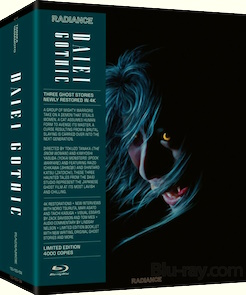
Daiei Gothic Volume Two: The Demon of Mount Oe/The Haunted Castle/The Ghost of Kasane Swamp - Limited Edition by Eric Cotenas (7th October 2025)
"Japan's classic ghost stories are brought to the screen by masters of the genre, Tokuzo Tanaka (The Snow Woman) and Kimiyoshi Yasuda (Yokai Monsters) […] newly restored in 4K, three more stories from the Daiei studio represent the Japanese ghost film at its most lavish and chilling." The Demon of Mount Oe: According to legend, the Four Heavenly Kings of the Genji – Sakata no Kintoki (Gamera vs. Viras' Kôjirô Hongô), Urabe no Suetake (The Loyal 47 Ronin's Narutoshi Hayashi), Usui no Sadamitsu (Zatoichi on the Road's Ryûzô Shimada), and Watanabe no Tsuna (Zatoichi Meets Yojimbo's ... |
|
|
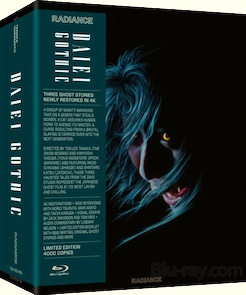
Daiei Gothic Volume Two: The Demon of Mount Oe/The Haunted Castle/The Ghost of Kasane Swamp - Limited Edition by Eric Cotenas (7th October 2025)
"Japan's classic ghost stories are brought to the screen by masters of the genre, Tokuzo Tanaka (The Snow Woman) and Kimiyoshi Yasuda (Yokai Monsters) […] newly restored in 4K, three more stories from the Daiei studio represent the Japanese ghost film at its most lavish and chilling." The Demon of Mount Oe: According to legend, the Four Heavenly Kings of the Genji – Sakata no Kintoki (Gamera vs. Viras' Kôjirô Hongô), Urabe no Suetake (The Loyal 47 Ronin's Narutoshi Hayashi), Usui no Sadamitsu (Zatoichi on the Road's Ryûzô Shimada), and Watanabe no Tsuna (Zatoichi Meets Yojimbo's ... |
|
|
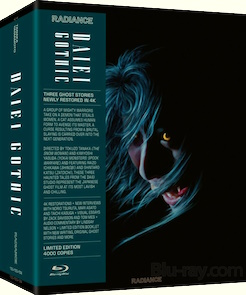
Daiei Gothic Volume Two: The Demon of Mount Oe/The Haunted Castle/The Ghost of Kasane Swamp - Limited Edition by Eric Cotenas (7th October 2025)
"Japan's classic ghost stories are brought to the screen by masters of the genre, Tokuzo Tanaka (The Snow Woman) and Kimiyoshi Yasuda (Yokai Monsters) […] newly restored in 4K, three more stories from the Daiei studio represent the Japanese ghost film at its most lavish and chilling." The Demon of Mount Oe: According to legend, the Four Heavenly Kings of the Genji – Sakata no Kintoki (Gamera vs. Viras' Kôjirô Hongô), Urabe no Suetake (The Loyal 47 Ronin's Narutoshi Hayashi), Usui no Sadamitsu (Zatoichi on the Road's Ryûzô Shimada), and Watanabe no Tsuna (Zatoichi Meets Yojimbo's ... |
|

|
Bhaji on the Beach by James-Masaki Ryan (7th October 2025)
"Bhaji on the Beach" (1993) Simi (played by Shaheen Khan) heads a community group for South Asian women and plans a road trip to the coastal town of Blackpool for the day. The women scheduled to join range from young teens to the elderly, all ready to take in some fresh air and time away from their daily routines. Ladhu (played by Nisha Nayar) and Madhu (played by Renu Kochar) are teens that are hoping to find some fun with local boys. Hashida (played by Sarita Khajuria) is a university student who finds out that she is pregnant and is unsure about her future with her studies as well as with her relationship with boyfriend Oliver (played by Mo Sesay). Asha (played by Lalita Ahmed) is a middle aged housewife who has daydreams and nightmares of Bollywood musicals and Lord Rama, who wonders if her life had gone in the right direction. Rekha (played by ... |
|

|
Who Wants to Kill Jessie? by Eric Cotenas (6th October 2025)
While scientist Ruzenka Beránková (Ikarie XB 1's Dana Medrická) has developed a serum that can influence dreams – demonstrating her invention on a cow whose nightmares of being bedeviled by gadflies are observed by her and her colleagues through the Wiseman Picture Tube – her husband Jindrich Beránek (The Cassandra Cat's Jirí Sovák) is attempting to crack the secret behind anti-gravity gloves, inspired by the comic strip "Who Wants to Kill Jessie?" about a buxom female scientist constantly imperiled by a villains after her inventions for nefarious purposes after discovering his subordinates in possession of the illicit reading material. Curious about her husband's disturbed sleep after their weekly conjugals, Ruzenka snoops on his dreams and grows jealous when seeing him in the company of a beautiful blonde woman. She injects Jindrich with her serum and banishes him to the couch, unaware of the side effects of her invention whi... |
|

|
This Property is Condemned: Imprint Collection #433 by Noor Razzak (5th October 2025)
Sydney Pollack’s "This Property Is Condemned" (1966) stands as a lush yet conflicted piece of Southern melodrama, a film that vibrates with atmosphere but struggles to reconcile its theatrical roots with cinematic realism. Adapted from Tennessee Williams’ one-act play, the story unfolds in a decaying fictional Mississippi town during the Great Depression, where the arrival of a railroad official, Owen Legate (Robert Redford), upends the fragile dreams of a young woman, Alva Starr (Natalie Wood). Beneath its romantic veneer lies a quiet despair—a sense that both the characters and the town itself are relics of a bygone promise, condemned not just by economics but by longing. Pollack’s direction, still early in his career, shows both ambition and uncertainty. The film captures the sweat and sensuality characteristic of Williams’ world—the faded grandeur of the American South, populated by desperate souls clinging to illusion. Yet Pollack’s polished Hollywood touch occasionally works against the material’s rawness. Where W... |
|

|
Jet Storm: Imprint Collection #437 by Noor Razzak (5th October 2025)
"Jet Storm", directed by Cy Endfield, is a tense British ensemble thriller that predates the airplane-disaster sub-genre popularized in the 1970's with films such as "Airport 1975" (1974) and its subsequent sequels, yet approaches its scenario with a psychological depth rarely seen in later, more spectacle-driven films. While ostensibly a suspense story about a man threatening to blow up a transatlantic flight, Endfield’s film is less concerned with pyrotechnics than with moral panic, guilt, and the thin veneer of civility that holds modern society together at 30,000 feet. The film opens with Ernest Tilley (Richard Attenborough) boarding a London-to-New York jet carrying a diverse group of passengers. Early on, he reveals to the flight crew that he has smuggled a bomb onboard, seeking revenge for the hit-and-run death of his daughter—a crime committed by another passenger. From this setup, Endfield constructs a slow-burning chamber piece in the sky, one that examines collective ethics as much as individual despair. Attenborough’s performance anchors the film. His Tilley is not a cartoonish villain but a broken man unraveli... |
|

|
Black Sheep by James-Masaki Ryan (2nd October 2025)
"Black Sheep" (2006) Fifteen years after a childhood trauma that left him with a fear of sheep, Henry Oldfield (played by Nathan Meister) returns to his family’s sheep farm in which he is ready to sell his share of the property to his older brother Angus (played by Peter Feeney). Angus Oldfield has gone into the field of genetics, and the farmland has been the site of a science laboratory that has been targeted by environmental activists. But after an altercation leads to a mutated lamb escaping, a chain of events start in which anything or anyone bitten by the creature become rabid creatures that prey on anything in their way… New Zealand is well known for being the land of sheep, in which the fluffy animals heavily outnumber the population of people in the country. In film, New Zealand produced some notable gory horror films, most famously with filmmaker Peter Jackson’s early works becoming influential milestones which led to his company WETA becoming a leader in practical and digital visual effects for many m... |
|

|
Fires on the Plain: The Criterion Collection by Noor Razzak (29th September 2025)
Kon Ichikawa’s "Fires on the Plain" (Japanese title - "Nobi") remains one of the most harrowing and unflinching depictions of war ever committed to film. Adapted from Shōhei Ōoka’s novel, the film follows Private Tamura (Eiji Funakoshi), a tubercular Japanese soldier stranded in the Philippines during the closing days of World War II. What begins as a simple struggle for survival descends into a chilling meditation on humanity stripped bare, as starvation, disease, and despair turn fellow soldiers into scavengers, deserters, and, eventually, cannibals. Ichikawa’s treatment of the material resists the romanticization of sacrifice that pervaded many postwar Japanese war films, instead presenting war as an existential void where human dignity corrodes under unbearable pressure. The film’s stark black-and-white cinematography by Setsuo Kobayashi enhances its unrelenting bleakness. The camera frequently frames Tamura as a small, almost swallowed figure against vast, indifferent landscapes. This visual language underscores the futi... |
|

|
Senso: Limited Edition by Eric Cotenas (27th September 2025)
Silver Ribbon (Best Cinematography): G.R. Aldo (winner) and Special Silver Ribbon: Luchino Visconti (winner) - Italian National Syndicate of Film Journalists, 1955 Golden Lion: Luchino Visconti (nominee) - Venice Film Festival, 1954 Golden Goblet (Best Actress): Alida Valli (winner) - Golden Goblets, 1955 Top 10 Film Award (Best Film): Luchino Visconti (nominee) - Cahiers du Cinéma, 1956 1866: Venice has been occupied by the Austrians, but a war of liberation is on the horizon. General La Marmora has forged an alliance with Prussia, emboldening Italian Nationalists to public demonstrations, the biggest one at the La Fenice Opera House during a performance of "Il trovatore" raining leaflets down on the audience from the upper boxes. When handsome Austrian soldier Franz Mahler (Rope's Farley Granger) mocks the demonstration, hot-headed marchese Roberto Ussoni (Teorema' ... |
|

|
Battleship Potemkin by James-Masaki Ryan (25th September 2025)
"Battleship Potemkin" (Броненосец «Потёмкин») (1925) English synth-pop duo Pet Shop Boys have consistently been at the top of the worldwide pop and electronic charts. Songs like "West End Girls" and "It's a Sin" are staples of 80s pop, their 90s work like "Go West" and "New York City Boy" continued their evolution with electronic music, and they have continued to be relevant into the 2000s. Their most recent album "Nonetheless" was their first to be released on the Blu-ray format with Dolby Atmos audio, and they continue to perform at sold out shows four decades since their debut. In 2003, the duo received an offer that was quite different from anything that they had done so far, and it was to create a new musical score for the 1925 silent Soviet feature "Battleship Potemkin". They had experience in film and stage before, with their music from their first two albums being used for the feature "It Couldn't Happen Here" as a long form music vid... |
|

|
Prey by Eric Cotenas (24th September 2025)
One night, an alien ship comes into Earth's orbit and alien Kator beams down into the middle of the English countryside. The bear-faced alien brutally murders a necking couple and takes over the body of the man Anderson (Enemy Mine's Barry Stokes,) and presents himself as a wounded, disoriented stranger to the residents of a nearby sprawling estate: young Jessica (Felicity's Glory Annen,) and her older companion Josephine (Vampyres' Sally Faulkner,). Jessica is sympathetic and even intrigued by the stranger, but Josephine is repelled by him yet too dismissive to take his odd behavior beyond face value ("He's no weirder than any other man"). Growing jealous over Jessica's infatuation with Anderson, Josephine welcomes the man to stay if only to show him up to Jessica as nothing more than an animal.... |
|

|
Bad Channels by Eric Cotenas (24th September 2025)
When Pahoota's AM radio station KDUL discovers that they can transmit nationwide at 666 MHz, station owner Vernon Locknut (The Shadow's Aaron Lustig) ditches the "All Polka" format in favor of hiring rock DJ Dan O'Dare (Bad Lieutenant's Paul Hipp), recently fined by the FCC for the on-air broadcast of his sexual encounter with another radio talent. Stuck covering the fluff assignment is Cable World News reporter Lisa Cummings (Dead Heat's Martha Quinn) who finds her own citing and other local reports of a UFO more interesting and runs off with the sheriff (Victor Rogers) to investigate a report. The reports turn out to be true as an alien and his robot partner take over the station with DJ Dan and his engineer Corky (... |
|

|
Raw Meat by Eric Cotenas (24th September 2025)
Golden Scroll (Best Horror Film): Raw Meat (nominee) - Academy of Science Fiction, Fantasy & Horror Films, 1975 When American student Alex (The Day of the Locust's David Ladd) and his British girlfriend Patricia (Crucible of Horror's Sharon Gurney) get off the tube one night at Russell Square Station, they nearly step over the body of a man (Blood from the Mummy's Tomb's James Cossins) on the stairs. Alex assumes he is a drunk but Patricia thinks he might be a diabetic. They check his wallet and discover he is James Manfred, OBE and tell a policeman up top but when they return to the scene, the man's body is gone. That seems to be the end of it until the report lands on the desk of Inspector Calhoun (... |
|

|
Raw Meat by Eric Cotenas (23rd September 2025)
Golden Scroll (Best Horror Film): Raw Meat (nominee) - Academy of Science Fiction, Fantasy & Horror Films, 1975 When American student Alex (The Day of the Locust's David Ladd) and his British girlfriend Patricia (Crucible of Horror's Sharon Gurney) get off the tube one night at Russell Square Station, they nearly step over the body of a man (Blood from the Mummy's Tomb's James Cossins) on the stairs. Alex assumes he is a drunk but Patricia thinks he might be a diabetic. They check his wallet and discover he is James Manfred, OBE and tell a policeman up top but when they return to the scene, the man's body is gone. That seems to be the end of it until the report lands on the desk of Inspector Calhoun (... |
|

|
The Last Horror Film: Tromatic Special Edition by Eric Cotenas (21st September 2025)
Saturn Award (Best International Film): The Last Horror Film (nominee) and Best Supporting Actress: Filomena Spagnuolo (nominee) - Academy of Science Fiction, Fantasy & Horror Films, 1993 Clavell de Plata (Best Cinematography): Thomas F. Denove (winner) - Sitges - Catalonian International Film Festival, 1982 New York cabbie Vinny Durand (The Ninth Configuration's Joe Spinell) has dreams of Hollywood fame, and his muse is Jana Bates (Dracula A.D. 1972's Caroline Munro), the "Queen of Horror Films". Leaving his job and his mother (Stardust Memories's Filomena Spagnuolo, Spinnel's real mother billed as "Mary Spinell") behind, Vinny takes off to Cannes - where Jana is promoting her new film "Scream", produced by her ex-husband Bret... |
|

|
Stateline Motel AKA L'ultima chance AKA The Last Chance AKA Motel of Fear (Blu-ray) by Rick Curzon (10th September 2025)
Ursula Andress - voted the No.1 Bond girl of all time, emerged from the sea in ‘Dr. No’ - Bond’s first outing - and into film history. Here she leads a heavyweight cast including a snarling Eli Wallach(The Good, the Bad and the Ugly), and action hunk Fabio Testi (The Big Racket). A second Bond girl, the alluring Barbara Bach (The Spy Who Loved Me), completes this iconic ensemble. But this is no quip-filled Hollywood caper. Under the gritty direction of Maurizio Lucidi - a master of emotional tensions – these cinema legends deliver powerful performances in a sleek psychological thriller elevated by a moody score from Academy Award Winner winner Luis Bacalov (The Postman, Django). After a deadly heist and a breathtaking car chase, criminals Wallach and Testi split up to evade police. Testi is tasked with getting the stolen jewels across the U.S.-Canada border, where he holes up in a sleepy border-town motel. There, he meets Michelle (Andress), smouldering as the trophy wife of the motel owner. A twisted game of cat and mouse ignites, charged by the genuine chemistry between Andress and Testi. In this edition’s exclusive interview, Fabio Testi confirms that their long romance began on the set of this film. As th... |
|
|
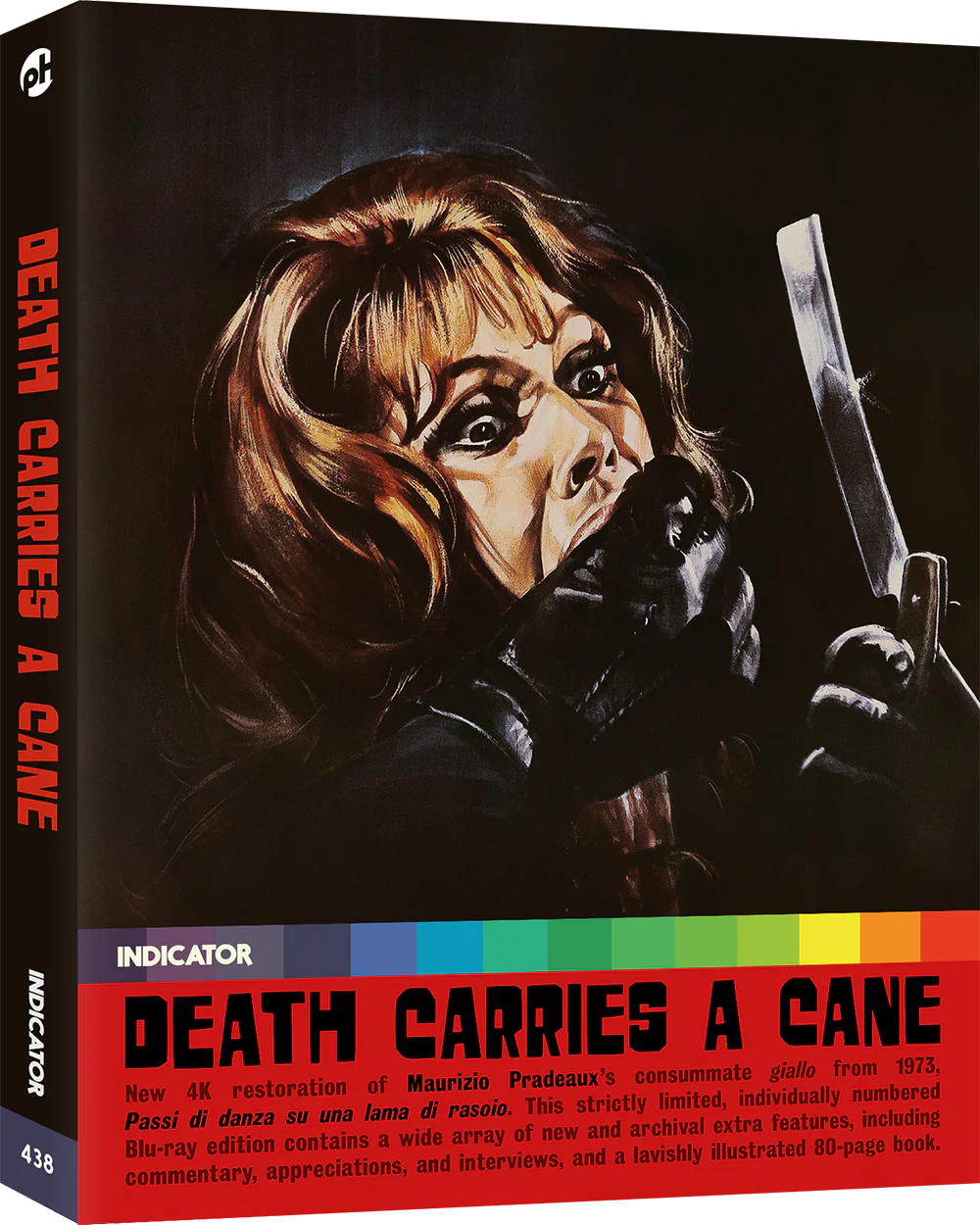
Death Carries a Cane AKA Passi Di Danza Su Una Lama Di Rasoio AKA Pasos de danza sobre el filo de una navaja AKA Tormenter (Blu-ray) by Rick Curzon (8th September 2025)
Robert Hoffmann (A Black Veil for Lisa), Nieves Navarro aka Susan Scott (The Big Gundown), and George Martín (A Pistol for Ringo) star in Death Carries a Cane, a stylish giallo mystery from director Maurizio Pradeaux (Churchill’s Leopards). Tourist Kitty (Navarro) stumbles upon a murder whilst looking through coin-operated binoculars. When witnesses start being gruesomely bumped off, Kitty teams up with boyfriend Alberto (Hoffmann) to try and find the black-clad killer ... if he doesn’t find her first! With supporting performances from Rosita Torosh (The Bird with the Crystal Plumage) and Simón Andreu (The Blood Spattered Bride), Death Carries a Cane is a bloody and shocking classic of Italian genre cinema.... |
|

|
Perfume of the Lady in Black (The) AKA Il Profumo della signora in nero (Blu-ray) by Rick Curzon (8th September 2025)
Mimsy Farmer (Four Flies on Grey Velvet), Maurizio Bonuglia (Ludwig), and Mario Scaccia (We Still Kill the Old Way) lead the cast of The Perfume of the Lady in Black, a surreal giallo thriller directed by Italian polymath Francesco Barilli (Hotel Fear). Silvia (Farmer) is tormented by hallucinations from her troubled childhood, including her mother applying perfume in a black dress. Her mental state unravels as she struggles to separate her surreal visions from a series of violent occurrences. Photographed by Palme d’Or-winning cinematographer Mario Masini (Padre Padrone) and scored by Academy Award-winner Nicola Piovani (Life Is Beautiful), The Perfume of the Lady in Black is an eccentric and stylish classic of the Italian giallo.... |
|

|
Red Sonja (Blu-ray) by Rick Curzon (28th August 2025)
An adaptation of the comic book, Red Sonja, a vengeful warrior known as a "She-Devil with a sword". Matilda Lutz is a badass barbarian on a mission in this action fantasy based on the best-selling comic series. Enslaved by an evil tyrant who wishes to destroy her people, barbarian huntress Red Sonja must unite a group of unlikely warriors to face off against Dragan the Magnificent and his deadly bride, Dark Annisia. Starring Matilda Lutz (Revenge), Robert Sheehan (The Umbrella Academy), Michael Bisping (Den of Thieves), Wallis Day (Sheroes), Luca Pasqualino (Skins), Martyn Ford (Final Score), Rhona Mitra (Underworld: Rise of the Lycans) and Veronica Ferres (The Bricklayer), Red Sonja is written by Tasha Huo (The Witcher: Blood Origin) and directed by M.J. Bassett (Solomon Kane). ... |
|
|
Inside (Blu-ray) by Rick Curzon (8th August 2025)
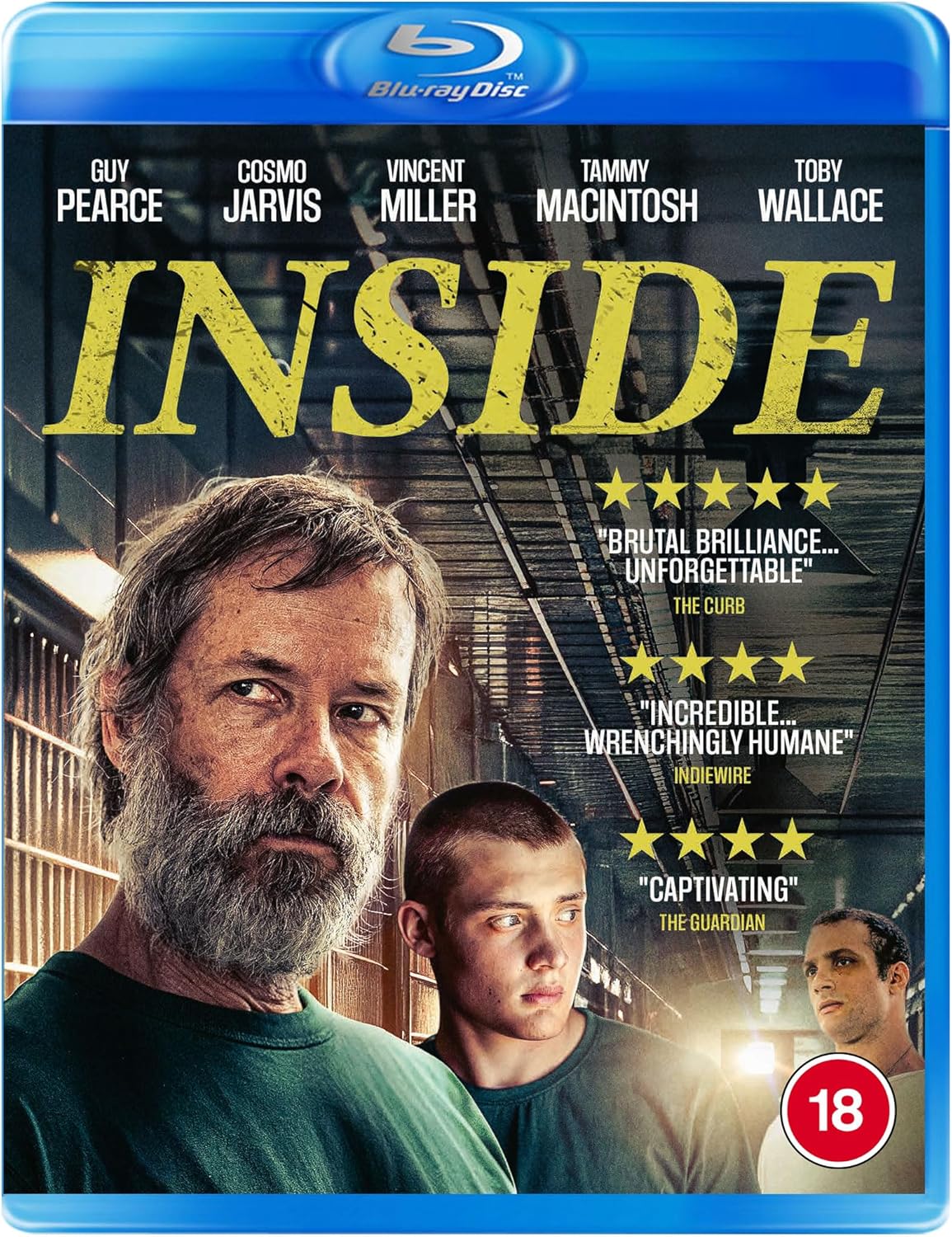
Transferred from juvenile to adult prison, young offender Mel is taken under the wing of Australia's most despised criminal, Mark Shepard, and Warren Murfett, a soon-to-be paroled inmate. When Murfett is forced into murdering Shepard to pay his debts, he finds a surprising accomplice in Mel. However the transformative paternal love triangle that blossoms between them may be their undoing. A fantastic character study that uniquely subverts prison movie tropes, and a profound exploration of the Australian incarceration system, this superbly crafted drama stars Guy Pearce (Memento, The Hurt Locker), Cosmo Jarvis (Shogun, Persuasion), and Toby Wallace (Babyteeth).... |
|
|
Liberation of L.B. Jones (The) (Blu-ray) by Rick Curzon (6th August 2025)
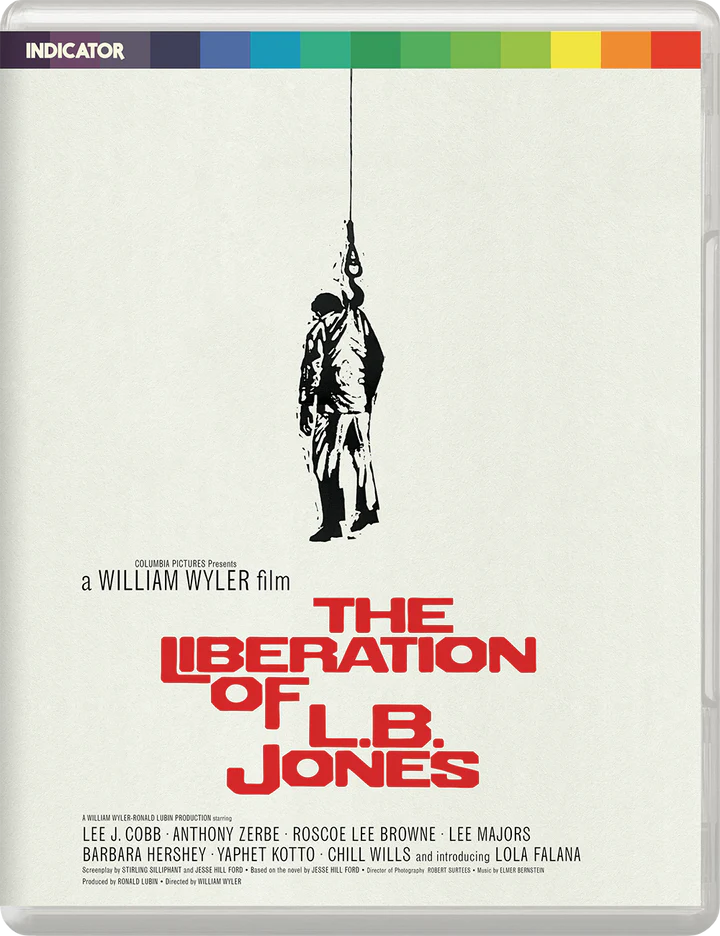
Legendary director William Wyler (The Collector, Ben-Hur) concluded his filmmaking career with The Liberation of L.B. Jones, a searing indictment of institutional racism starring Lee J Cobb (The Dark Past), Anthony Zerbe (The Omega Man), and Roscoe Lee Browne (Cisco Pike). When Black funeral director L B Jones (Browne) finds that his pregnant wife Emma (Lola Falana) is having an affair with white policeman Worth (Zerbe), he demands a divorce. Worth and his racist colleagues exact brutal revenge upon Jones, and conspire to cover up their actions with the assistance of the local District Attorney (Cobb) With supporting performances from Barbara Hershey (Hannah and Her Sisters) and Yaphet Kotto (Blue Collar), and with a screenplay by Jesse Hill Ford (adapting his own novel) and Stirling Silliphant (Murphy’s War), The Liberation of L.B. Jones is a shocking tale of intolerance and injustice.... |
|
|
Saraband for Dead Lovers AKA Saraband (Blu-ray) by Rick Curzon (4th August 2025)
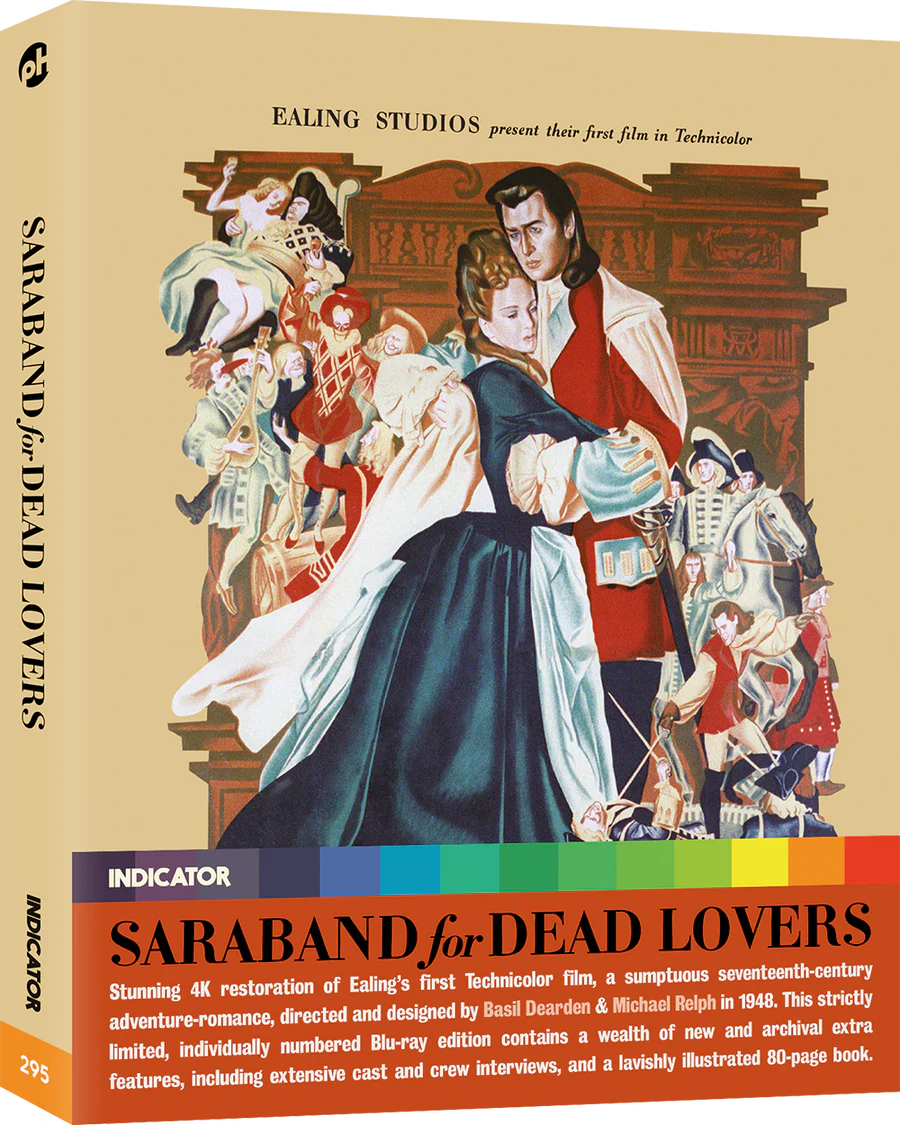
From the celebrated director-producer team of Basil Dearden and Michael Relph (The Gentle Gunman, The Ship That Died of Shame) comes Saraband for Dead Lovers, the first colour production from Britain’s legendary Ealing Studios. In this sumptuous historical romance, a teenage princess (Joan Greenwood, Girl Stroke Boy) is trapped in a loveless marriage to Prince George Louis of Hanover (Peter Bull, The Old Dark House), heir to the British throne. To escape the boredom, she begins a dangerous affair with Count Philip Konigsmark (Stewart Granger, Footsteps in the Fog), an affair with potentially terrible consequences for the pair... Adapted from a novel by Helen Simpson (Under Capricorn) by Alexander Mackendrick (Whisky Galore!) and John Dighton (Kind Hearts and Coronets), scored by acclaimed composer Alan Rawsthorne (The Cruel Sea), and shot in ravishing three-strip Technicolor by the great Douglas Slocombe (The Young Ones, Murphy’s War), Saraband for Dead Lovers is a glorious feast for the eyes and ears.... |
|
|
Out of the Clouds (Blu-ray) by Rick Curzon (4th August 2025)
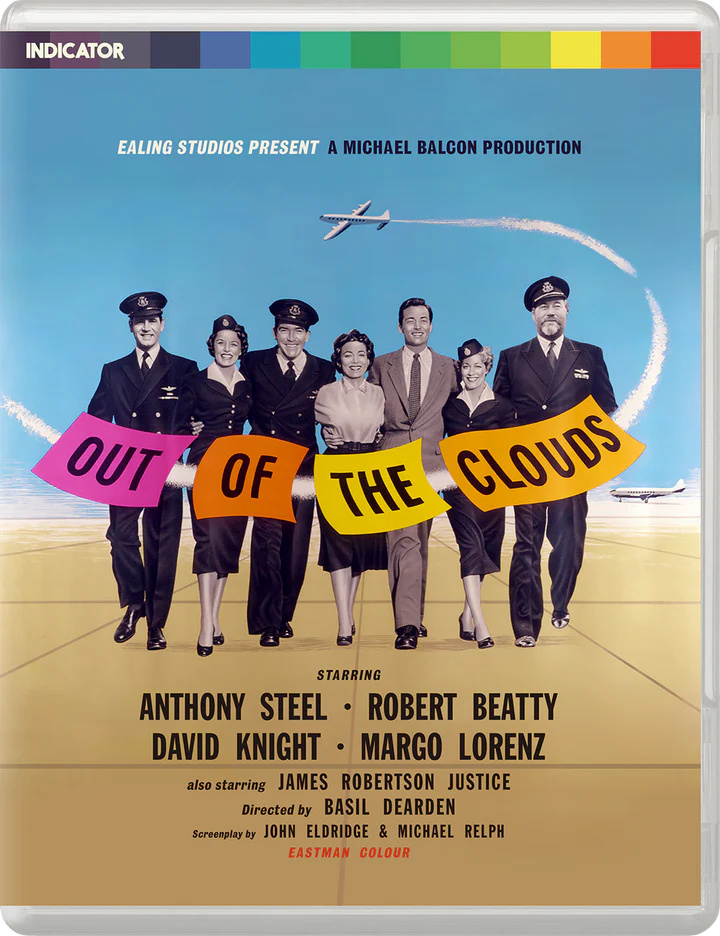
From director Basil Dearden and producer Michael Relph (Saraband for Dead Lovers, The Gentle Gunman) comes Out of the Clouds, a star-studded adventure of the burgeoning jet age from Ealing Studios. A series of stories unfolds over twenty-four hours in a bustling airport: pilot and gambler Gus (Anthony Steel, Another Man’s Poison) finds himself involved in a smuggling ring; duty officer Nick (Robert Beatty, The Gentle Gunman) vies for the attentions of attractive stewardess Penny (Eunice Grayson, Dr. No); and American engineer Bill (David Knight, The Young Lovers), falls for Leah (Margo Lorenz), a young woman en route to marry her fiancé. With a screenplay co-written by documentary pioneer John Eldrige (Waverley Steps), Out of the Clouds was partly filmed at the then-rapidly expanding London Airport (now known as Heathrow), and boasts a level of realism thanks to technical assistance received from leading airlines and the Ministry of Transport.... |
|
|
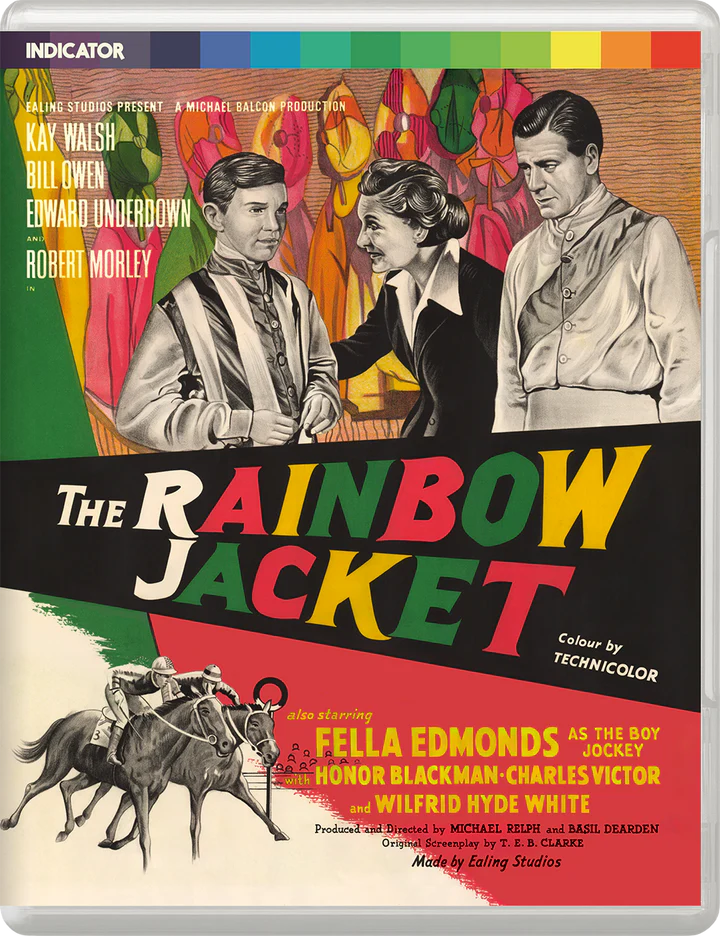
Rainbow Jacket (The) (Blu-ray) by Rick Curzon (4th August 2025)
Robert Morley (Hammer Films’ The Old Dark House), Kay Walsh (David Lean’s Oliver Twist), Bill Owen (The Ship That Died of Shame), and Honor Blackman (Jason and the Argonauts) lead the cast of The Rainbow Jacket, a thrilling exposé of the horse racing world from Ealing Studios. Disgraced champion jockey Sam (Owen) takes eager young racing enthusiast Georgie (Fella Edmonds) under his wing. As Georgie’s talent becomes evident, Sam sees a chance of redemption... if he can resist temptation. From the celebrated director-producer team of Basil Dearden and Michael Relph (The Gentle Gunman, Saraband for Dead Lovers), and scripted by T E B Clarke (Passport to Pimlico, The Blue Lamp), The Rainbow Jacket is a thrilling tale of ambition and integrity.... |
|
|
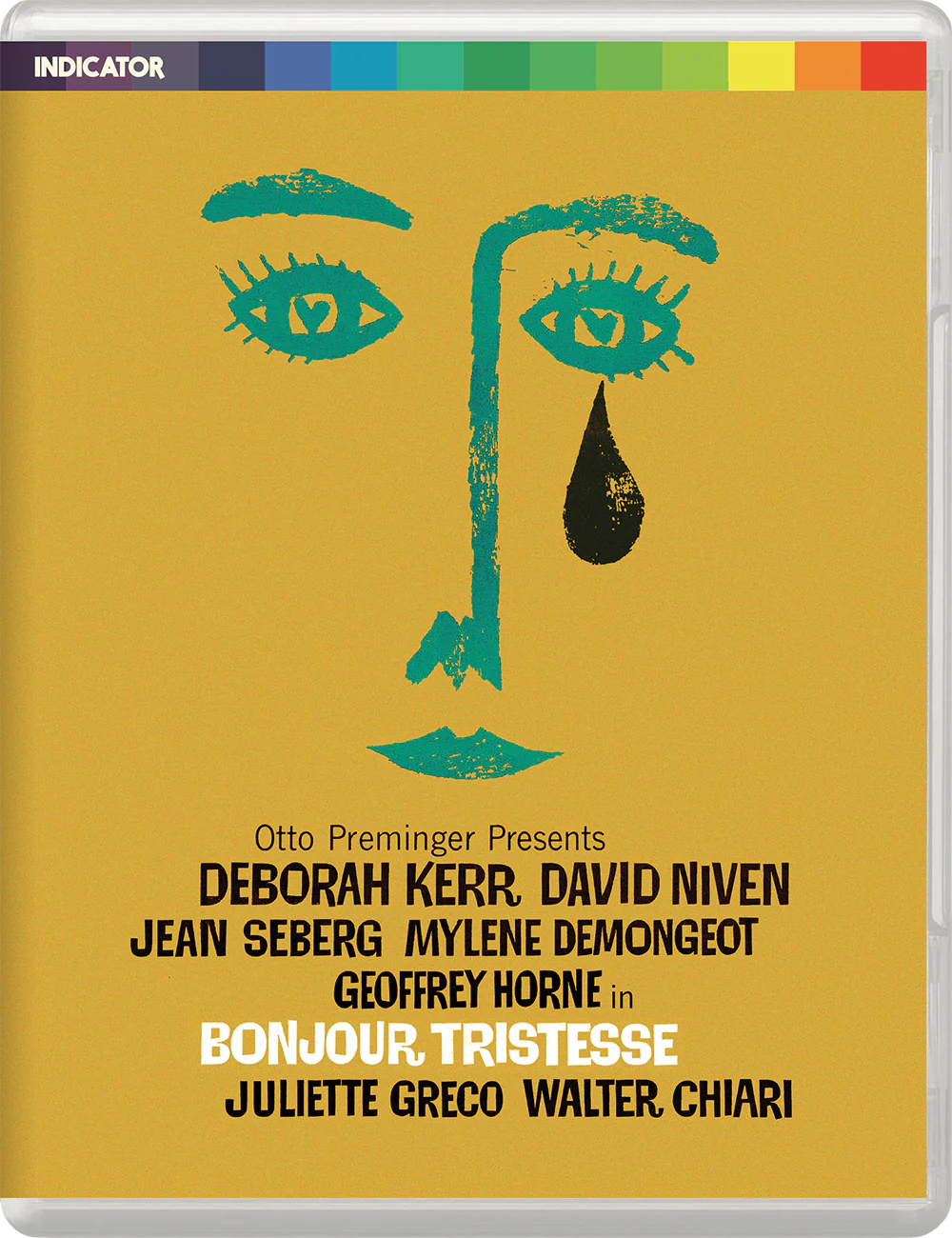
Bonjour Tristesse (Blu-ray) by Rick Curzon (4th August 2025)
Holidaying on the French Riviera, widower and playboy Raymond (Niven) begins to develop a relationship with staid Anne (Kerr). His manipulative daughter Cécile (Seberg), fearing her behaviour will be curtailed, conspires to come between them, with tragic results... Shot on location by Georges Périnal (The Life and Death of Colonel Blimp) in an innovative mixture of colour and black-and-white photography, Bonjour Tristesse was a favourite film of nouvelle vague filmmakers François Truffaut and Jean-Luc Godard, with the latter casting Seberg in his debut feature, Breathless.... |
|

|
Storm Center (Blu-ray) by Rick Curzon (4th August 2025)
Bette Davis (Connecting Rooms), Brian Keith (5 Against the House), Kim Hunter (Lilith) and Paul Kelly (Adventure in Sahara) star in Storm Center, a shocking tale of censorship and its consequences. Idealistic librarian Alicia (Davis) is fired after refusing to remove a book from her small-town library. Despite the attempts of a local judge (Kelly) to defend her, attorney Paul (Keith) leads a campaign to vilify Alicia, with unexpected consequences for the community. Directed and co-written by Daniel Taradash (Knock on Any Door), Storm Center is a powerful rallying cry for tolerance and freedom of speech.... |
|

|
... And Justice for All. (Blu-ray) by Rick Curzon (4th August 2025)
Al Pacino (The Godfather), Jack Warden (Shampoo), and John Forsythe (The Trouble with Harry) lead the ensemble cast of ... And Justice for All, a brutal indictment of the American legal system from director Norman Jewison (A Soldier’s Story). Firebrand defence attorney Arthur Kirkland (Pacino) finds that the demands of his job are at odds with his conscience. When he is forced to defend a judge (Forsythe) who is accused of a terrible crime, he plunges into a moral crisis. Written by Barry Levinson (Rain Man) and Valerie Curtin, and with acting support from Lee Strasberg (The Godfather Part II) and Jeffrey Tambor (The Larry Sanders Show), ... And Justice for All is a riveting and powerful exploration of hypocrisy and injustice.... |
|

|
Taming of the Shrew (The) AKA La Bisbetica Domata (Blu-ray) by Rick Curzon (9th July 2025)
Richard Burton (Absolution) and Elizabeth Taylor (Secret Ceremony) star in The Taming of the Shrew, a vibrant and bawdy adaptation of Shakespeare’s immortal romantic comedy from director Franco Zeffirelli (Romeo and Juliet). Nobleman Baptista (Michael Hordern, Girl Stroke Boy) seeks husbands for his two daughters. Bianca (Natasha Pyne, The Devil-Ship Pirates) has no trouble attracting suitors, but the headstrong and acerbic Kate (Taylor) drives men away ... until the nobleman Petruchio (Burton) is inspired by a sizeable dowry to take on the challenge. This lavish production’s all-star cast is rounded out by Cyril Cusack (Gideon’s Day), Michael York (Cabaret), Alan Webb (The Third Secret) and Victor Spinetti (A Hard Day’s Night) and features a lush soundtrack by the great Nino Rota (The Godfather, 8½).... |
|
|
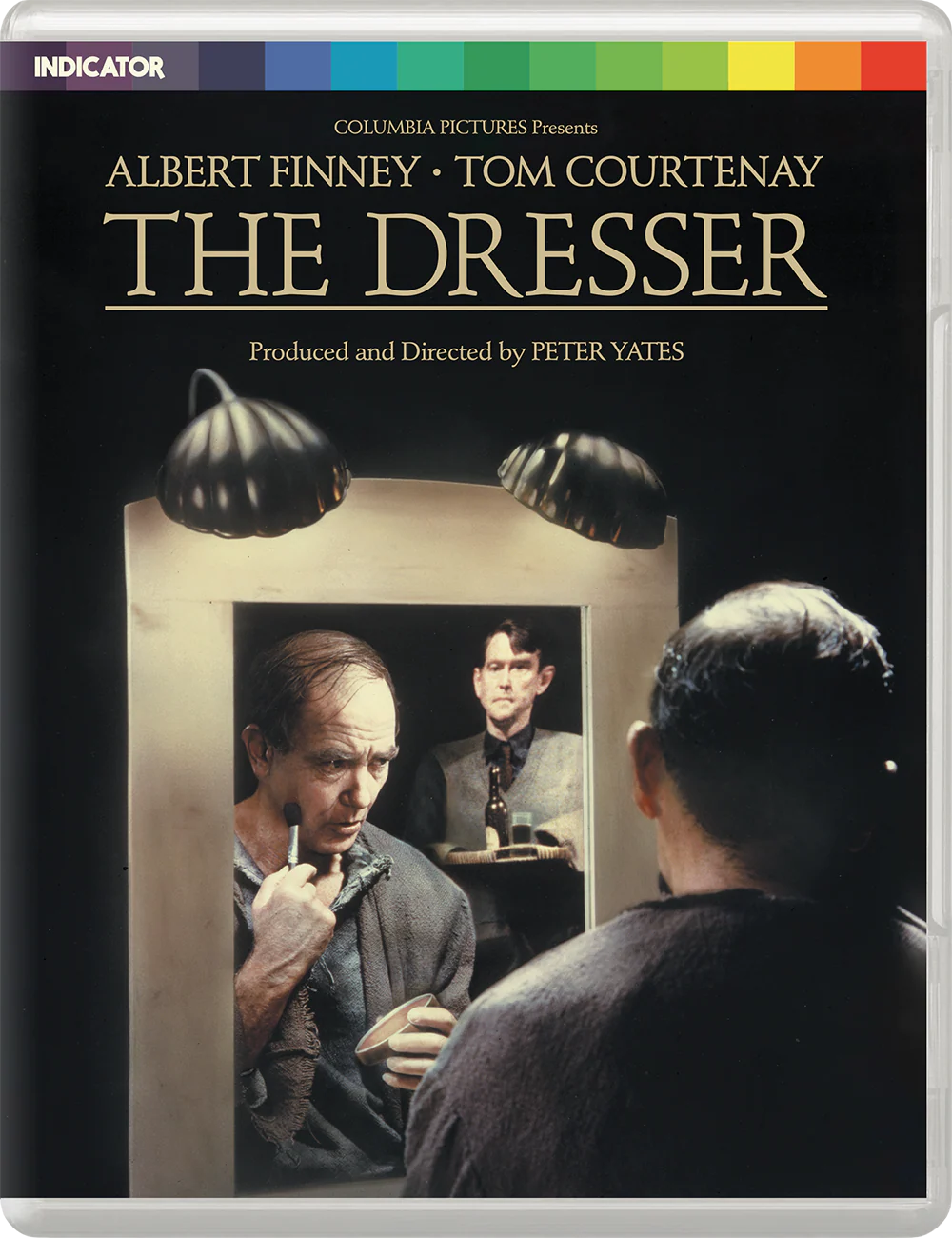
Dresser (The) (Blu-ray) by (9th July 2025)
Peter Yates (Summer Holiday, Murphy’s War) directs Albert Finney (Charlie Bubbles), Tom Courtenay (Otley), and Edward Fox (Force 10 from Navarone) in The Dresser, a heart-rending yet darkly humorous tale of life in the theatre. During the Second World War, a group of actors take Shakespeare across the industrial north, led by an ageing and imperious actor known only as ‘Sir’ (Finney), against a background of air-raid sirens and exploding bombs. With his mental and physical condition deteriorating, selfless dresser Norman (Courtenay) struggles to ensure that the show – Sir’s 227th performance as King Lear – goes on. Based on the experiences of screenwriter Ronald Harwood (The Pianist), assistant to legendary Shakespearean actor Sir Donald Wolfit (90° in the Shade), The Dresser is a moving exploration of loyalty and unrequited love.... |
|
|
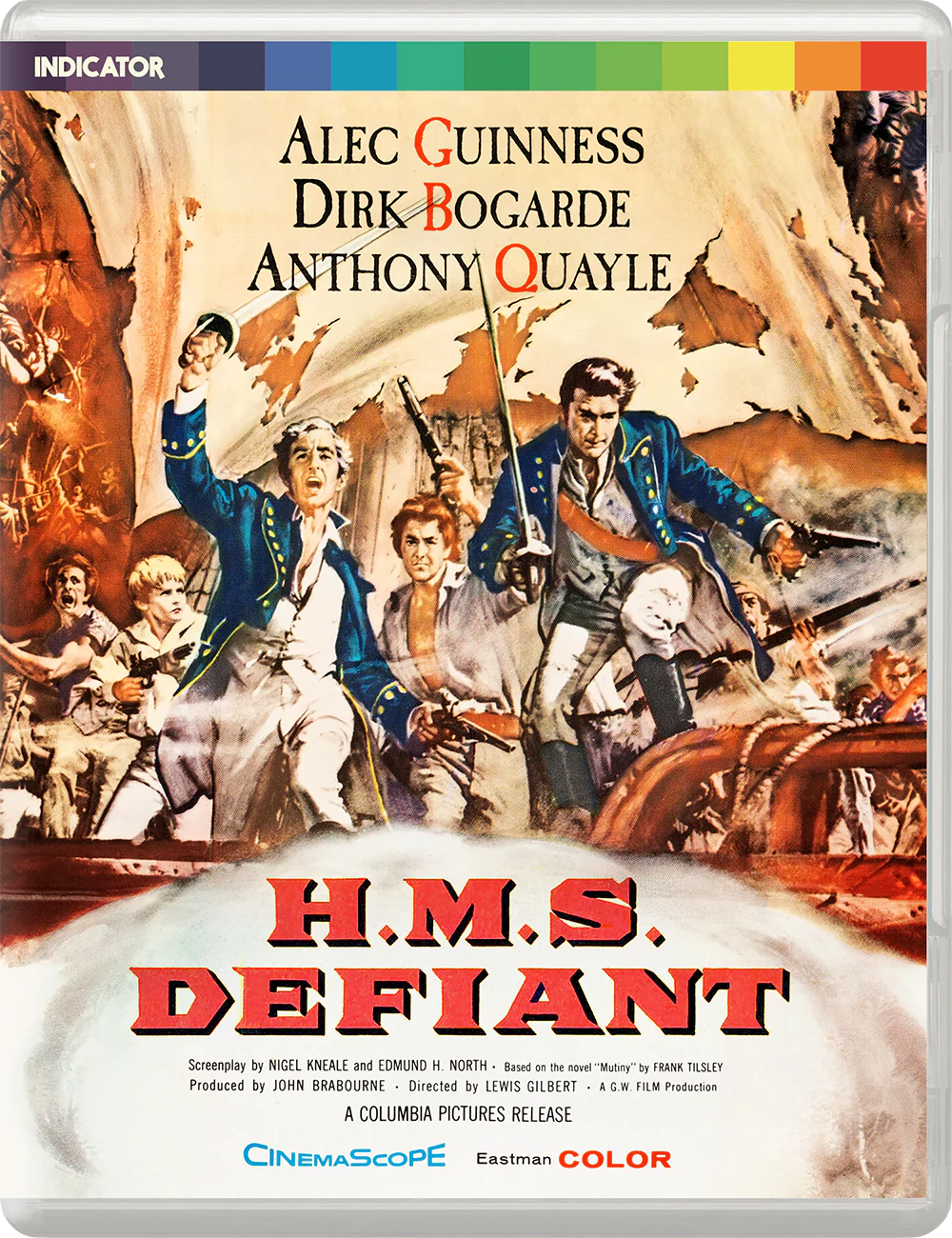
H.M.S. Defiant AKA Damn the Defiant! (Blu-ray) by Rick Curzon (9th July 2025)
Alec Guinness (Kind Hearts and Coronets) and Dirk Bogarde (The Gentle Gunman) lead the all-star cast of H.M.S. Defiant, a rip-roaring tale of mutiny on the high seas from the great British action director Lewis Gilbert (Sink the Bismarck!, The Spy Who Loved Me). During the French Revolutionary Wars, Crawford (Guinness), Captain of the Defiant, enters into a battle of wills with his sadistic First Officer Scott-Padget (Bogarde). When Crawford is injured during a skirmish with French forces, Scott-Padget takes control, but the crew begin to rebel against his brutal command, whilst remaining loyal to Crawford and to their country. Adapted by Edmund H North (The Day the Earth Stood Still) and Nigel Kneale (The Quatermass Experiment) from Frank Tilsley’s best-selling novel Mutiny, H.M.S. Defiant – originally released in the US as Damn the Defiant! – does not water down its depiction of the harsh realities of naval life.... |
|

|
Hireling (The) (Blu-ray) by Rick Curzon (9th July 2025)
Robert Shaw (Young Winston) and Sarah Miles (Blowup) star in The Hireling, a devastating exploration of emotional repression, trauma, and class relations from director Alan Bridges (The Shooting Party). In the years following the First World War, the widowed Lady Franklin (Miles) establishes an unlikely friendship with her working-class driver, Ledbetter (Shaw), a traumatised former sergeant major. But, as Lady Franklin develops a relationship with a scheming former officer (Peter Egan, Ever Decreasing Circles), Ledbetter’s precarious mental state rapidly deteriorates. Adapted from the novel by L. P. Hartley (The Go-Between) by acclaimed playwright and screenwriter Wolf Mankowitz (The Two Faces of Dr. Jekyll), The Hireling was awarded the Palme d’Or at the 1973 Cannes Film Festival.... |
|

|
What Have They Done to Your Daughters? AKA La Polizia chiede aiuto AKA Coed Murders AKA The Police Want Help (Blu-ray) by Rick Curzon (7th July 2025)
Massimo Dallamano's razor-sharp thriller WHAT HAVE THEY DONE TO YOUR DAUGHTERS? masterfully fuses the stylized violence of giallo with the gritty realism of poliziotteschi in a thematic follow-up to his acclaimed ‘What Have You Done to Solange?’. Transforming genre conventions into vehicles for societal commentary, this newly restored film dares to expose the organized grooming and exploitation of young women – and the institutional corruption behind it. When a teenage girl's body is discovered hanging in an attic, it is District Attorney Vittoria Stori who leads the investigation. Toppling genre and period conventions, it is the captivatingly beautiful Giovanna Ralli who portrays the DA with striking gravitas, bringing both steely determination and sensitivity to the ground-breaking role of a woman heading a team of hardened police detectives. As her team- including the famed Mario Adorf (The Tin Drum, The Bird with the Crystal Plumage) - uncovers a web of high-level depravity and secrecy, a mysterious black-clad motorcyclist armed with a butcher’s cleaver begins eliminating witnesses and detectives alike. With their lives at stake, the officers race to uncover the truth before becoming the killer’s next victims. ... |
|

|
Carnal Knowledge (Blu-ray) by Rick Curzon (12th June 2025)
Jack Nicholson (The Passenger) and Art Garfunkel (Bad Timing) star alongside Candice Bergen (Starting Over) and Ann-Margret (R.P.M.) in Carnal Knowledge, one of American cinema’s most daring and provocative films, masterfully directed by Mike Nichols (The Graduate). During their time in college, roommates Sandy (Garfunkel) and Jonathan (Nicholson) reveal their innermost feelings about girls and sex to one another, each taking his own approach to getting what he wants. As they grow older and establish new relationships, they continue to share their fantasies and frustrations about the opposite sex, each responding differently to the mixture of desire, distain and disinterest they experience. Note-perfect dialogue from the pen of the great Jules Feiffer (Little Murders) and exquisite photography by legendary Italian cinematographer Giuseppe Rotunno (Fellini Satyricon) combine with universally outstanding performances – including from supporting players Rita Moreno (The Night of the Following Day) and Carol Kane (The Last Detail) – to create an unflinching and uncompromising classic of the New Hollywood era.... |
|
|
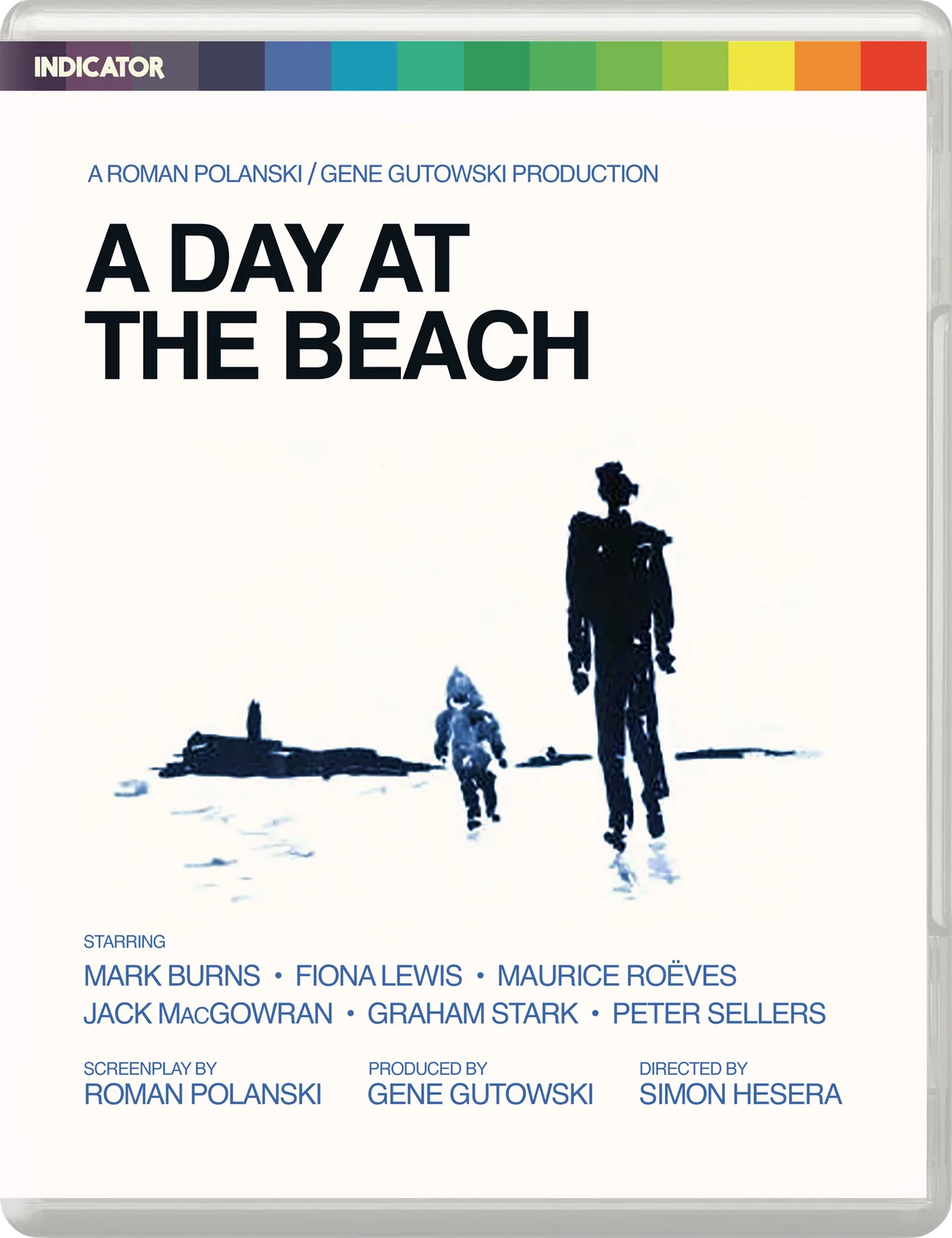
Day at the Beach (A) AKA Roman Polanski's A Day at the Beach (Blu-ray) by Rick Curzon (12th June 2025)
Mark Burns (Death in Venice) and Beatrice Edney (Highlander) star in A Day at the Beach, a downbeat tale of alcoholism written by Roman Polanski (Chinatown), produced by regular Polanski collaborator Gene Gutowski (Cul-de-Sac, The Pianist), and shot by celebrated cinematographer Gilbert Taylor (Repulsion, Star Wars). When Bernie (Burns) takes a little girl, Winnie (Edney) – who may or may not be his niece or perhaps daughter – for a trip to a decrepit Danish seaside town on a day of heavy rain, he sets about cajoling the locals in a desperate quest for alcohol, leaving his young charge to fend for herself. The sole feature-film credit for director Simon Hesera, A Day at the Beach received scant distribution at the time of its production, but – after having been lost for decades – it was eventually revived and re-released to critical acclaim, with audiences particularly interested to discover the charismatic cameo appearances by British comedy legends Peter Sellers (The Blockhouse, Hoffman) and Graham Stark (The Wrong Box).... |
|
|
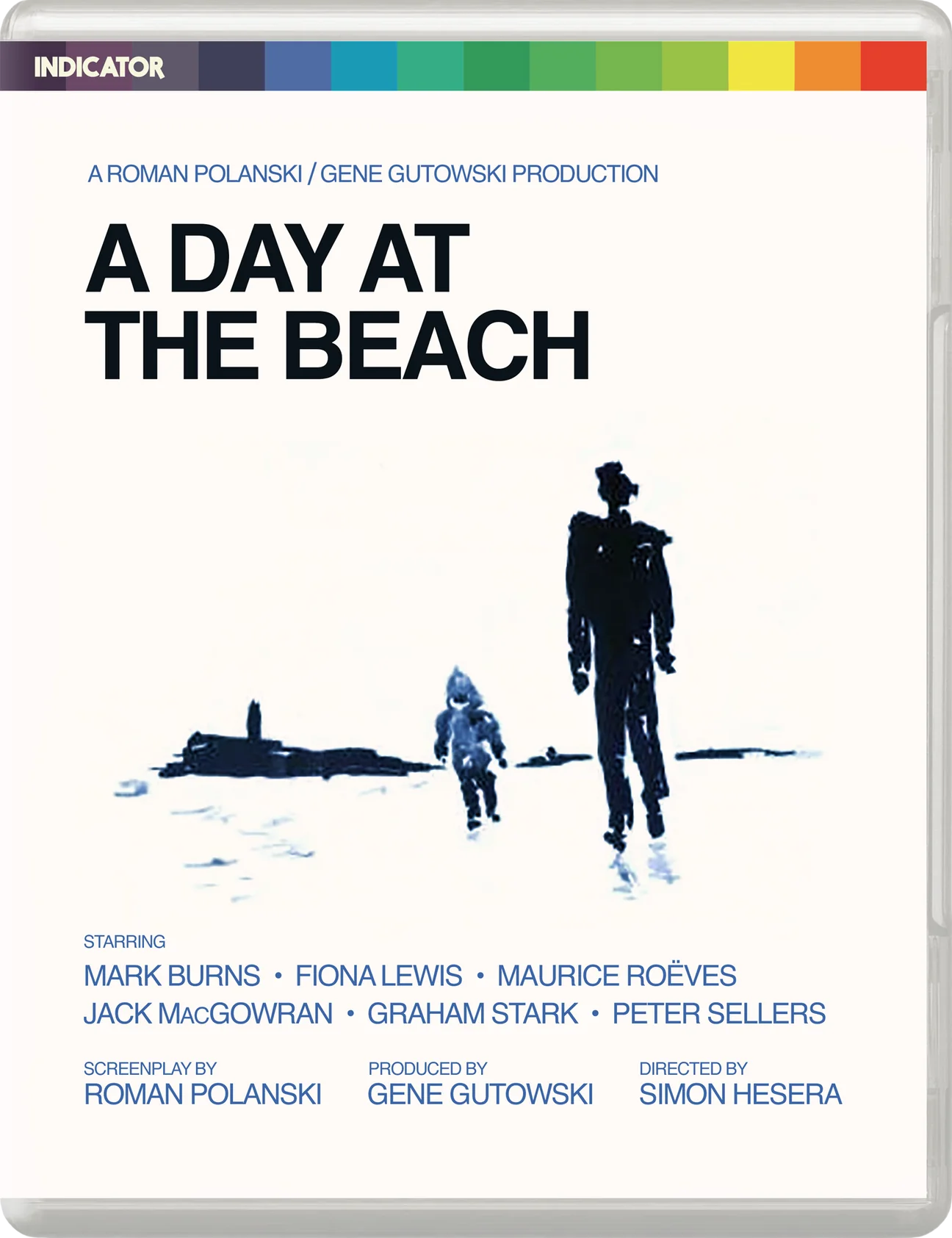
Day at the Beach (A) AKA Roman Polanski's A Day at the Beach (Blu-ray) by Rick Curzon (12th June 2025)
Mark Burns (Death in Venice) and Beatrice Edney (Highlander) star in A Day at the Beach, a downbeat tale of alcoholism written by Roman Polanski (Chinatown), produced by regular Polanski collaborator Gene Gutowski (Cul-de-Sac, The Pianist), and shot by celebrated cinematographer Gilbert Taylor (Repulsion, Star Wars). When Bernie (Burns) takes a little girl, Winnie (Edney) – who may or may not be his niece or perhaps daughter – for a trip to a decrepit Danish seaside town on a day of heavy rain, he sets about cajoling the locals in a desperate quest for alcohol, leaving his young charge to fend for herself. The sole feature-film credit for director Simon Hesera, A Day at the Beach received scant distribution at the time of its production, but – after having been lost for decades – it was eventually revived and re-released to critical acclaim, with audiences particularly interested to discover the charismatic cameo appearances by British comedy legends Peter Sellers (The Blockhouse, Hoffman) and Graham Stark (The Wrong Box).... |
|
|
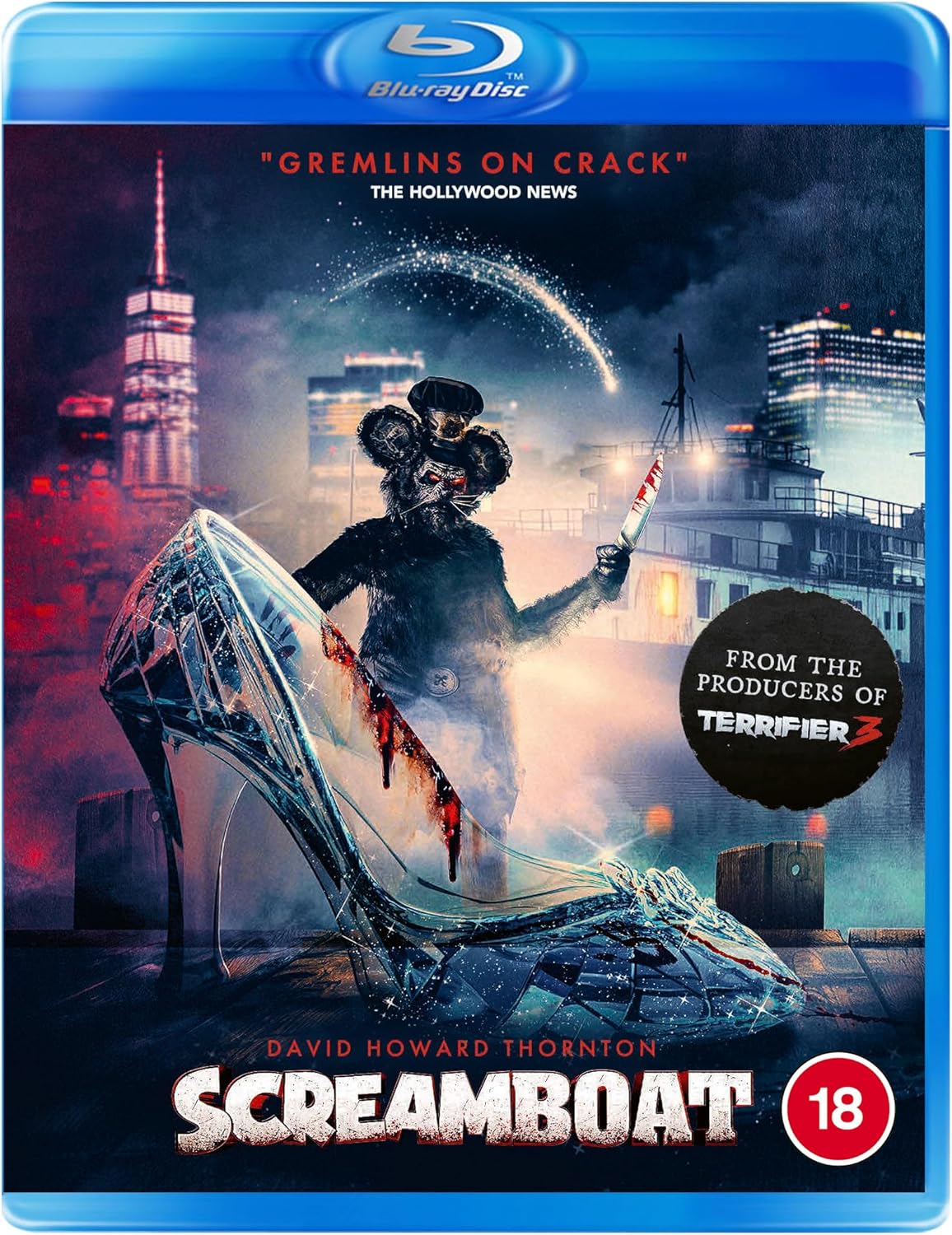
Screamboat (Blu-ray) by Rick Curzon (29th May 2025)
See David Howard Thornton transform from the Art the Clown to the tiny terror of New York in this horror that’ll make you shiver the next time you hear a squeak in the night. A group of New Yorkers are on a late-night ferry ride that turns deadly when a mischievous mouse begins a rampage, targeting unsuspecting passengers. The unlikely crew must band together to thwart the murderous menace before their relaxing commute turns into a nightmare.... |
|

|
Oasis of Fear AKA Un Posto ideale per uccidere AKA An Ideal Place to Kill AKA Dirty Pictures AKA Deadly Trap AKA Meurtre par intérim (Blu-ray) by Rick Chrzon (20th May 2025)
From cult maestro Umberto Lenzi — the notorious architect of Italian shock cinema behind depravity classics like ‘Cannibal Ferox’ and ‘Almost Human’ - comes the long-neglected, provocative home-invasion thriller OASIS OF FEAR, where Lenzi expertly balances explicit shocks with genuine suspense. Cool, calculated, and chic. "A steamy, boundary-pushing story!" reveals Ornella Muti, the ever-mesmerising Italian screen icon (Princess Aura in Flash Gordon) in a revelatory new interview exclusive to this release. "Lenzi captures how rapidly society was changing, the freedom and the danger that came with it." Sizzling with magnetic performances, OASIS OF FEAR stars the luminous young Muti and dashing cult favourite Ray Lovelock as free-spirited hippies funding their Italian adventure by selling provocative photos of themselves. When the police shut down their operation, they seek refuge in a secluded villa owned by Barbara (Irene Papas, ‘Zorba the Greek’), a wealthy widow whose sophisticated charm hides sinister intentions. What begins as a flirtatious ménage-à-trois spirals into a claustrophobic psychological power game — where tensions, hidden motives, and shifting loyalties lead to blackmail, threats, and ultima... |
|
|
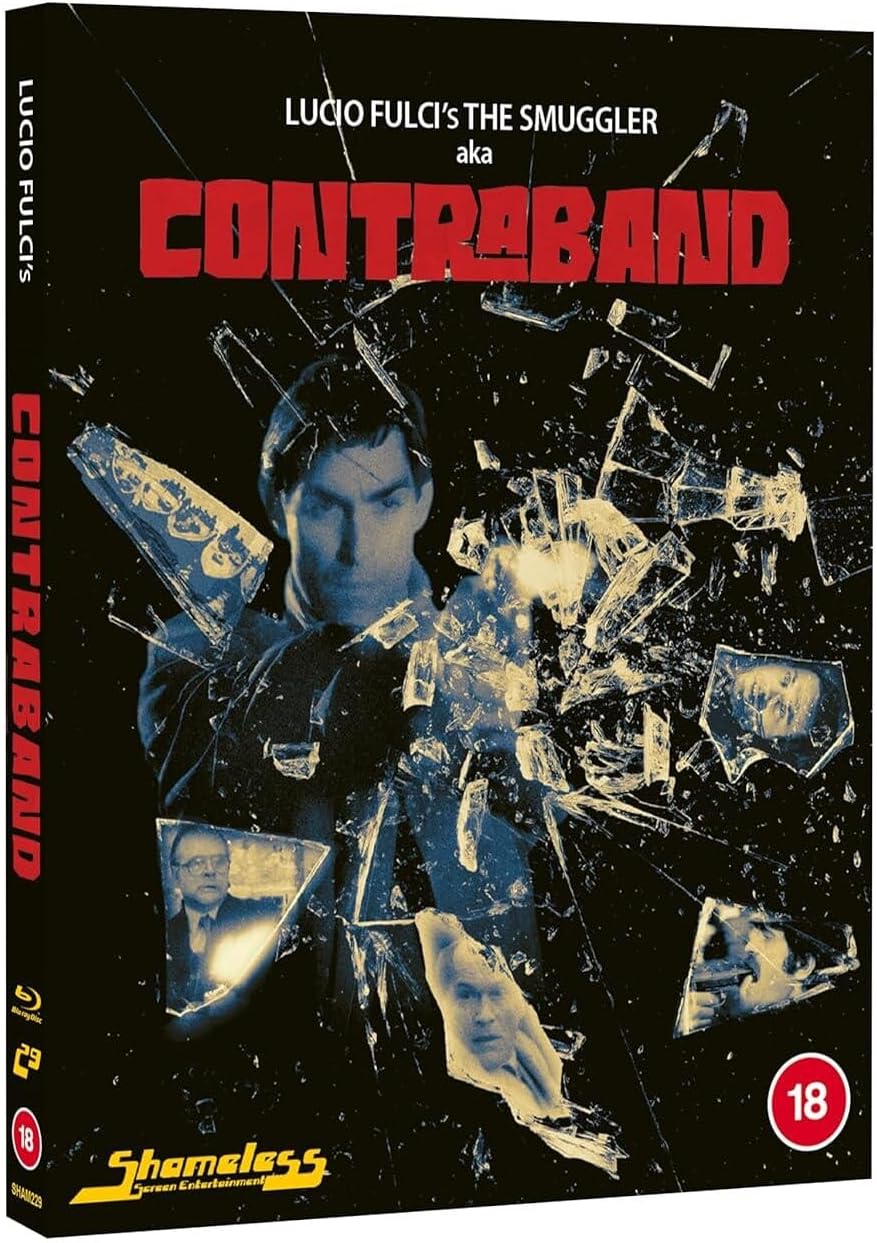
Contraband AKA Luca Il Contrabbandiere AKA The Smuggler AKA The Naples Connection (Blu-ray) by Rick Curzon (20th May 2025)
Renowned as the “Godfather of Gore” for legendary cult supernatural horror films like “The Beyond” , Lucio Fulci delivers the suspense of noir with the punch of a horror film in his unapologetically brutal crime masterpiece, CONTRABAND - creating a raw, uncompromisingly visceral vision of organised crime with horror-style set-pieces - including one of the most notorious scenes in Italian crime cinema, the "melting face" sequence. Fulci lays bare the raw - and completely unromanticised - brutality of the Camorra in one of his most hard-hitting and unrelenting films, merging crime thriller with Horror’s shocking aesthetics. “It got so real that the local underworld got involved in the actual making of the film”, explains star Fabio Testi in an exclusive interview for this release. CONTRABAND stars the ever-charismatic tough-guy Fabio Testi (‘Revolver’) who delivers a powerful, career-defining performance as Luca - a tough-as-nails cigarette smuggler whose world explodes when his brother is murdered and his wife abducted. This ignites a ferocious mob war, with a ruthless new order attempting to replace the old criminal order with deadly narcotics. What follows isn’t just revenge - it’s a one-man war agains... |
|

|
Rose of Iron AKA La Rose de Fer AKA The Iron Rose AKA Nuit du Cimetière AKA The Crystal Rose (Blu-ray) by Rick Curz (6th May 2025)
Having built his reputation with a quartet of eccentric erotic vampire tales, Jean Rollin surprised audiences with The Iron Rose (Le Rose de fer), an atmospheric detour into the realms of the fantastique. When a couple – played by Françoise Pascal (Burke and Hare) and Hugues Quester (Je t’aime moi non plus) – stumble across an old cemetery, they begin to explore its gravestones and crypts. But, as night falls, they find that they are unable to leave ... Restored in 4K from the original negative, The Iron Rose also features Rollin regulars Nathalie Perrey (Lips of Blood) and Mireille Dargent (Requiem for a Vampire), and is considered by many to be one of its director’s crowning achievements. This new edition also includes a new 4K restoration of Rollin’s early short film The Yellow Loves, an evocation of the poetry of Tristan Corbière, whose work was also the inspiration for The Iron Rose.... |
|

|
Rose of Iron AKA La Rose de Fer AKA The Iron Rose AKA Nuit du Cimetière AKA The Crystal Rose (Blu-ray) by Rick Curzon (6th May 2025)
Having built his reputation with a quartet of eccentric erotic vampire tales, Jean Rollin surprised audiences with The Iron Rose (Le Rose de fer), an atmospheric detour into the realms of the fantastique. When a couple – played by Françoise Pascal (Burke and Hare) and Hugues Quester (Je t’aime moi non plus) – stumble across an old cemetery, they begin to explore its gravestones and crypts. But, as night falls, they find that they are unable to leave... Restored in 4K from the original negative, The Iron Rose also features Rollin regulars Nathalie Perrey (Lips of Blood) and Mireille Dargent (Requiem for a Vampire), and is considered by many to be one of its director’s crowning achievements. This new edition also includes a new 4K restoration of Rollin’s early short film The Yellow Loves, an evocation of the poetry of Tristan Corbière, whose work was also the inspiration for The Iron Rose.... |
|

|
Schoolgirl Hitchhikers AKA Jeunes filles impudiques AKA Girls Without Shame AKA High School Hitch Hikers (Blu-ray) by Rick Curzon (6th May 2025)
Joëlle Cœur (The Demoniacs) and Gilda Arancio (Tender and Perverse Emanuelle) star in Girls Without Shame (Jeunes filles impudiques), Jean Rollin’s first foray into the world of erotic cinema, made under the pseudonym ‘Michel Gentil’. Two curious young women, Monica (Cœur) and Jackie (Arancio), find an abandoned old house whilst out hiking. Retiring to bed, they soon find that the house is a hangout for a criminal gang who suspect them of stealing their loot... Restored in 4K from the original negative, Girls Without Shame (aka Schoolgirl Hitchhikers) features a score by regular Rollin composer Pierre Raph (Requiem for a Vampire) and supporting turns by Willy Braque (Lips of Blood) and Rollin himself, and sees the director successfully transfer his trademark images and themes to a new genre. This edition also includes a new restoration of Hubert Lacoudre’s rare 1972 short film Sexana, an erotic spin on Alice in Wonderland, also starring Cœur.... |
|

|
Schoolgirl Hitchhikers AKA Jeunes filles impudiques AKA Girls Without Shame AKA High School Hitch Hikers (Blu-ray) by Rick Curzon (6th May 2025)
Joëlle Cœur (The Demoniacs) and Gilda Arancio (Tender and Perverse Emanuelle) star in Girls Without Shame (Jeunes filles impudiques), Jean Rollin’s first foray into the world of erotic cinema, made under the pseudonym ‘Michel Gentil’. Two curious young women, Monica (Cœur) and Jackie (Arancio), find an abandoned old house whilst out hiking. Retiring to bed, they soon find that the house is a hangout for a criminal gang who suspect them of stealing their loot... Restored in 4K from the original negative, Girls Without Shame (aka Schoolgirl Hitchhikers) features a score by regular Rollin composer Pierre Raph (Requiem for a Vampire) and supporting turns by Willy Braque (Lips of Blood) and Rollin himself, and sees the director successfully transfer his trademark images and themes to a new genre. This edition also includes a new restoration of Hubert Lacoudre’s rare 1972 short film Sexana, an erotic spin on Alice in Wonderland, also starring Cœur.... |
|

|
Four Flies on Grey Velvet AKA 4 mosche di velluto grigio AKA Quattro mosche di velluto grigio AKA 4 mouches de velours gris (Blu-ray 4K) by Rick Curzon (16th April 2025)
Dario Argentodescribes FOUR FLIES ON GREY VELVET as a deeply personal exploration of his inner turmoil: “I decided to let loose, go crazy, and unleash all my creativity and personal nightmares. Psychoanalysis plays a major role in the film because it’s partly autobiographical – rather Freudian, in fact.” Both Argento and lead actor Michael Brandon, in exclusive interviews for this edition, reveal how the director found his alter ego in Brandon, channelling his own paranoia to create an unsettling psychological thriller. The result is a shocking, knife-edge whodunit with a stunning twist. Introspection becomes art in Argento’s hands, making FOUR FLIES ON GREY VELVET essential viewing for anyone seeking a glimpse into the director’s psyche. It concludes Argento’s iconic ‘Animal’ trilogy, paving the way for ‘Suspiria’ and his later expressionistic masterpieces that earned him the title ‘Master of Horror.’ Celebrated rock musician Roberto Tobias (Michael Brandon) is thrust into a nightmare. Framed for a brutal stabbing, he soon finds himself ensnared in a web of senseless murders. The only clue to the deranged killer lies in a cryptic image captured on a victim’s retina. Roberto’s desperate searc... |
|

|
Four Flies on Grey Velvet AKA 4 mosche di velluto grigio AKA Quattro mosche di velluto grigio AKA 4 mouches de velours gris (Blu-ray) by Rick Curzon (16th April 2025)
Dario Argentodescribes FOUR FLIES ON GREY VELVET as a deeply personal exploration of his inner turmoil: “I decided to let loose, go crazy, and unleash all my creativity and personal nightmares. Psychoanalysis plays a major role in the film because it’s partly autobiographical – rather Freudian, in fact.” Both Argento and lead actor Michael Brandon, in exclusive interviews for this edition, reveal how the director found his alter ego in Brandon, channelling his own paranoia to create an unsettling psychological thriller. The result is a shocking, knife-edge whodunit with a stunning twist. Introspection becomes art in Argento’s hands, making FOUR FLIES ON GREY VELVET essential viewing for anyone seeking a glimpse into the director’s psyche. It concludes Argento’s iconic ‘Animal’ trilogy, paving the way for ‘Suspiria’ and his later expressionistic masterpieces that earned him the title ‘Master of Horror.’ Celebrated rock musician Roberto Tobias (Michael Brandon) is thrust into a nightmare. Framed for a brutal stabbing, he soon finds himself ensnared in a web of senseless murders. The only clue to the deranged killer lies in a cryptic image captured on a victim’s retina. Roberto’s desperate searc... |
|

|
Behold a Pale Horse (Blu-ray) by Rick Curzon (7th April 2025)
Gregory Peck (MacArthur), Omar Sharif (Lawrence of Arabia), and Anthony Quinn (R.P.M.) lead the cast of Behold a Pale Horse, a powerful drama from director Fred Zinnemann (The Day of the Jackal). Twenty years after the Spanish Civil War, Republican guerilla Manuel (Peck) lives in exile in France. Francoist Captain Viñolas (Quinn) is tasked with capturing him, and senses an opportunity when Manuel’s mother (Mildred Dunnock) falls ill, but hasn’t counted on the involvement of priest Father Francisco (Sharif), who tries to protect Manuel and guide him away from his path to violence. Adapted by J P Miller (Days of Wine and Roses) from a novel by Emeric Pressburger (The Red Shoes), Behold a Pale Horse is a riveting tale of morality, betrayal, and resistance.... |
|

|
Harriet Craig (Blu-ray) by Rick Curzon (2nd April 2025)
From director Vincent Sherman (Affair in Trinidad) comes the classic drama Harriet Craig, starring Joan Crawford (Strait-Jacket) and Wendell Corey (Rear Window). Manipulative and possessive Harriet (Crawford) controls every aspect of the lives of her husband Walter (Corey) and cousin Clare (K T Stevens, Bob & Carol & Ted & Alice), and schemes to destroy their chances of happiness. However, when they become aware of her treachery, her world begins to fall apart... Based on the Pulitzer Prize-winning play Craig’s Wife by George Kelly (The Show-Off), Harriet Craig boasts one of Joan Crawford’s most devastating performances.... |
|

|
Escape from the 21st Century AKA Shi Ji an Quan Che Li (Blu-ray) by (14th March 2025)
Prepare to step in and out of time with three friends as they discover they have the power to travel back and forth through the fabric of time with a sneeze. However, the lives they hoped to have in the future are not as promising as they had anticipated and with that, they need to take on the responsibility of taking over the world.... |
|

|
Thirst (Blu-ray) by Rick Curzon (21st February 2025)
Chantal Contouri (Snapshot), David Hemmings (Harlequin), and Henry Silva (The Tall T) star in Thirst, a shocking fusion of horror and science fiction from legendary Australian producer Antony I Ginnane (Patrick). A sinister organisation known as the Brotherhood kidnaps Kate (Contouri), believing her to be the descendant of Countess Báthory, the Hungarian noblewoman who reputedly had vampiric tendencies. A battle of wills ensues as the Brotherhood tries to force the horrified Kate to join their blood-drinking sacrificial cult. Only Dr Fraser (Hemmings) is willing to help her ... ... |
|

|
Thirst (Blu-ray) by Rick Curzon (21st February 2025)
Chantal Contouri (Snapshot), David Hemmings (Harlequin), and Henry Silva (The Tall T) star in Thirst, a shocking fusion of horror and science fiction from legendary Australian producer Antony I Ginnane (Patrick). A sinister organisation known as the Brotherhood kidnaps Kate (Contouri), believing her to be the descendant of Countess Báthory, the Hungarian noblewoman who reputedly had vampiric tendencies. A battle of wills ensues as the Brotherhood tries to force the horrified Kate to join their blood-drinking sacrificial cult. Only Dr Fraser (Hemmings) is willing to help her... ... |
|
|
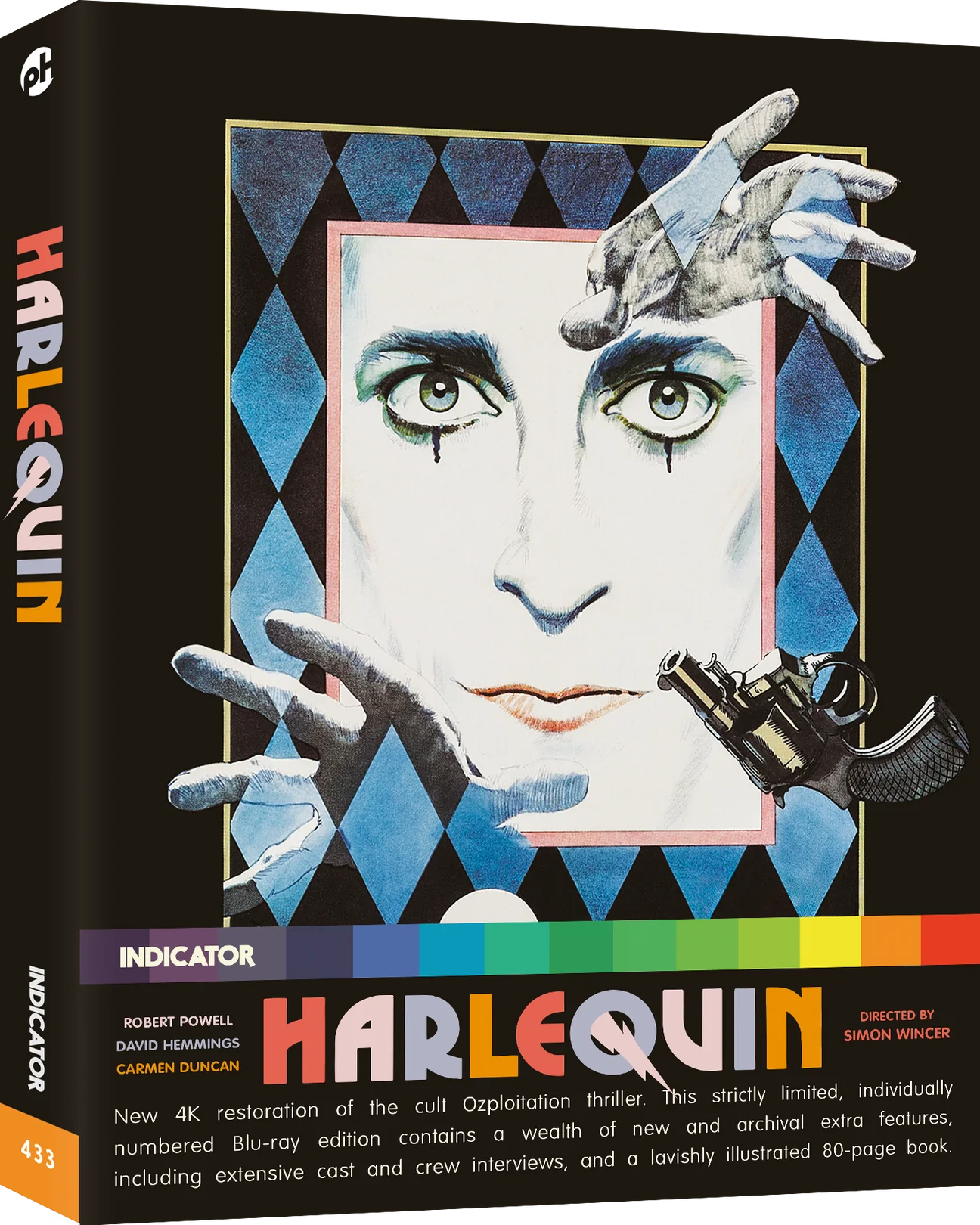
Harlequin AKA Dark Forces (Blu-ray) by Rick Curzon (21st February 2025)
Robert Powell (The Survivor), David Hemmings (Fragment of Fear), Carmen Duncan (Turkey Shoot), and Broderick Crawford (The Mob) star in Harlequin, a mysterious and fantastical thriller from director Simon Wincer (Snapshot) and writer Everett De Roche (Roadgames). When eccentric faith healer Gregory Wolfe (Powell) apparently cures the terminally ill son of Senator Nick Rast (Hemmings), Rast’s wife (Duncan) places her faith in Wolfe’s powers. But when Wolfe begins meddling in sensitive government business, political fixer Doc Wheelan (Crawford) decides to make the problem go away... Inspired by Rasputin’s influence over the Russian court, Harlequin (released in the US as Dark Forces) is a classic Australian chiller from producer Antony I Ginnane (Patrick).... |
|